San Sebastián, Puerto Rico
St. Sebastián Del Pepino
San Sebastián (sahn se-bahs-tee-AHN) is known as “San Sebastián del Pepino” and also as the “Cradle of the Hammock,” a reference to its well-known artisanal tradition. Its residents are known as pepinianos and, colloquially, as patrulleros. The municipality’s patron saint is Saint Sebastian the Martyr, a central figure in its historical and religious identity.
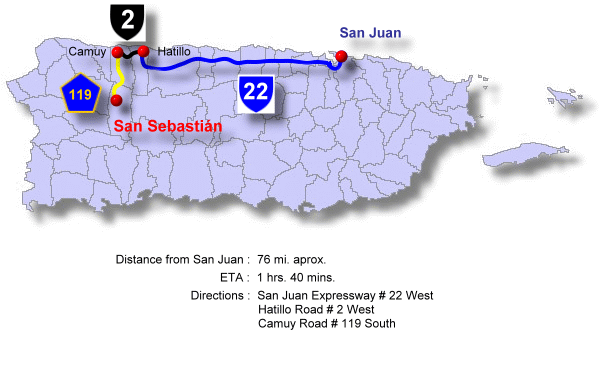
The municipality is located in the mountainous interior of northwestern Puerto Rico. It borders Isabela and Quebradillas to the north, Lares to the east, Las Marías to the south, and Moca and Añasco to the west—an inland location that has shaped its agricultural development and rural character.
From a geographic standpoint, San Sebastián is part of the Northern Humid Hills region. Its terrain is predominantly mountainous, with elevations ranging from 100 to 300 meters above sea level, highlighted by the mogotes and rolling hills that define the area’s landscape.
Economically, San Sebastián has maintained a traditional base rooted in agriculture and livestock. The municipality has been distinguished by the cultivation of coffee and minor crops, as well as cattle raising focused on milk and meat production. These activities are complemented by light manufacturing industries, particularly garment production, which support the local economy.
Foundation and History
The municipality’s original name was San Sebastián de las Vegas y el Pepino, referencing its location in a broad valley protected by mountains, irrigated by the Culebrinas and Guatemala rivers, and surrounded by karst mogotes locally known as “pepinos,” a distinctive feature of the region’s landscape.
Official authorization for the town’s founding dates to 1752, and Don Cristóbal González, a local resident, is recognized as its founder. Seven years later, in 1759, construction of the first parish church was completed and placed under the patronage of Saint Sebastian the Martyr. Subsequently, in 1808 and 1812, the Casa del Rey and the Town Hall were built, consolidating the town’s administrative structure.
During the early years of development, following forest exploitation and the decline of timber resources, El Pepino’s economy relied mainly on cattle and horse ranching. Agricultural production also included sugarcane, coffee, cotton, tobacco, rice, and minor crops, which sustained the local economy during the colonial period.
Beginning in 1815, El Pepino received numerous immigrants who introduced capital and enslaved labor, significantly stimulating economic growth. By the 1820s, the town had 53 wooden sugar mills, four distilleries processing sugarcane molasses, and agricultural production—especially coffee, cotton, and minor crops—had increased substantially.
In 1823, the town’s first primary school was established, and by 1828 the population exceeded 9,000 inhabitants. Eighteen years later, El Pepino had more than 100 homes, two primary schools, and a municipal population exceeding 10,000 residents, reflecting sustained growth.
San Sebastián was also linked to one of the most significant events in Puerto Rican history: the Grito de Lares (1868). One of the most active revolutionary committees organizing the uprising was “El Porvenir del Pepino,” whose notable members included Manuel Cebollero, Eusebio Ibarra, Cristóbal Castro, Cesáreo Martínez, Clodomiro Abril, and Francisco José Méndez. These events included the seizure of Lares and the failed attempt to take El Pepino, key moments in Puerto Rico’s independence movement.
In 1869, the government officially authorized the name change from El Pepino to San Sebastián, solidifying the municipality’s identity.
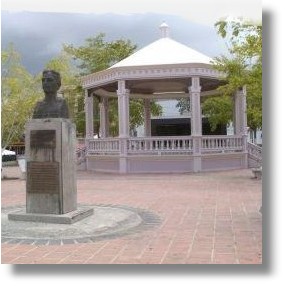
By 1919, as a legacy of its historical development, San Sebastián had several important public buildings, including the Casa del Rey, the Slaughterhouse, the Meat Market, the Municipal Hospital, the Mental Hospital, the Cemetery Chapel, and the Municipal Bandstand, reflecting the institutional growth achieved by the early twentieth century.
Municipal Government
The municipality of San Sebastián operates under an autonomous municipal government, composed of a mayor and a municipal legislature elected by popular vote.
The municipal administration is responsible for essential services such as public works, urban planning, emergency management, culture, sports, and community development programs.
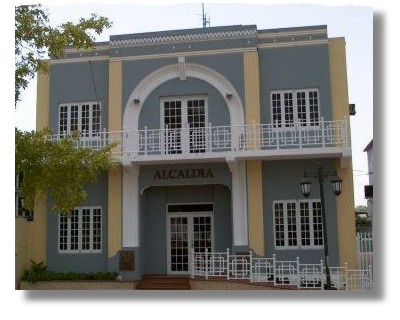
San Sebastián City Hall (Casa Alcaldía) serves as the municipality’s administrative center and houses the main local government offices.
Sports and Recreation
Sports and recreation play an important role in community life in San Sebastián. The municipality has sports facilities, recreational parks, and areas designated for physical activities and community events.
The most commonly practiced sports include baseball, basketball, and volleyball, along with family-oriented recreational activities organized by the municipality and community organizations.
Culture and Community Life
San Sebastián maintains a strong cultural identity, particularly within its rural communities and traditional neighborhoods. Community, cultural, and religious organizations play an active role in preserving traditions, organizing events, and strengthening the sense of belonging.
Cultural activities, music, theater, and community celebrations reflect the historical pride of the people of San Sebastián.
Rural Tourism and Ecotourism
Thanks to its mountainous landscape, rivers, waterfalls, and protected natural areas, San Sebastián has established itself as a destination for rural tourism and ecotourism. Visitors come to enjoy nature, traditional cuisine, local culture, and experiences connected to rural communities.
Natural spaces, reserves, and historic haciendas are among the municipality’s key tourism attractions.
Local Commerce and Economy
San Sebastián’s local commerce is composed mainly of small and medium-sized businesses, including shops, restaurants, professional services, and family-owned businesses that serve both residents and visitors.
These businesses complement traditional agricultural, livestock, and manufacturing activities, and play a fundamental role in the municipality’s economic and social development.
Public Safety and Essential Services
San Sebastián provides essential services related to public safety, health, emergency management, and community response, coordinated between municipal and state agencies to meet residents’ needs and respond effectively to emergency situations.
Location
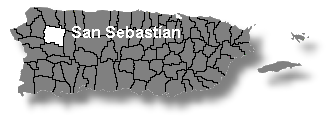 The municipality of San Sebastián is located in the mountainous interior of northwestern Puerto Rico. It borders Isabela and Quebradillas to the north, Las Marías to the south, Moca and Añasco to the west, and Lares to the east.
Its geographic location has influenced the municipality’s historical, economic, and cultural development, as well as its close relationship with neighboring towns in the interior and the northwestern region of the island.
Land Area
137.8 square kilometers
53.0 square miles
Population
39,345 residents (2020 Census)
Population Density:
320.7 residents per square kilometer
834.0 residents per square mile
Demonym
Pepinianos
Nicknames
- San Sebastián del Pepino
- Los Pepinianos
- Cradle of the Hammock
- Los Patrulleros
Wards: San Sebastian, Puerto Rico
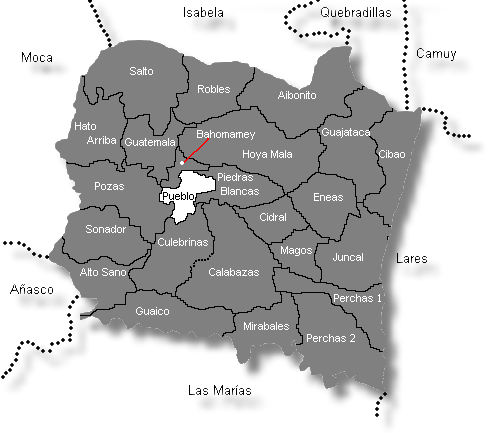
| Census 2020: Population by Wards - San Sebastián |
Habitants |
| Aibonito | 2,116 |
| Alto Sano | 1,282 |
| Bahomamey | 2,740 |
| Calabazas | 2,458 |
| Cibao | 1,218 |
| Cidral | 453 |
| Culebrinas | 4,006 |
| Eneas | 912 |
| Guacio | 733 |
| Guajataca | 700 |
| Guatemala | 2,919 |
| Hato Arriba | 1,991 |
| Hoya Mala | 3,505 |
| Juncal | 2,075 |
| Magos | 242 |
| Mirabales | 624 |
| Perchas 1 | 1,024 |
| Perchas 2 | 1,072 |
| Piedras Blancas | 2,562 |
| Pozas | 3,713 |
| Robles | 1,595 |
| Salto | 2,887 |
| San Sebastián Pueblo | 1,952 |
| Sonador | 1,425 |
| Total | 39,345 |
Source: U.S. Census Bureau – Census 2020
Patron
Saint Sebastian the Martyr
Parroquia San Sebastián Mártir
- Mailing Address: P.O. Box 801, San Sebastián, PR 00685
- Phone: (787) 896-1028
Mass Schedule:
- Monday–Friday: 7:00 a.m. and 6:15 p.m.
- Saturday: 6:15 p.m.
- Sunday: 7:00 a.m., 8:15 a.m., 9:30 a.m., 10:30 a.m., and 6:15 p.m.
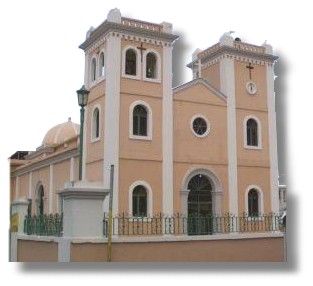
The Parish of Saint Sebastian the Martyr is the municipality’s principal religious center and the focal point of the patron saint festivities traditionally celebrated in January, as well as other liturgical and community activities throughout the year.
Topography
San Sebastián is located in the mountainous interior of northwestern Puerto Rico. In general, its terrain is moderately mountainous, without extremely high elevations. The landscape is characterized by numerous small hills or mogotes, locally known as “pepinos,” geological formations typical of the region’s karst terrain and the origin of the historic name San Sebastián del Pepino.
Hydrography
The municipality is irrigated by a network of rivers and tributaries that form part of important watersheds in western Puerto Rico. The main bodies of water include:
- Río Grande de Añasco
- Río Culebrinas
- Río Guajataca
San Sebastián is also part of the Guajataca Lake watershed, a reservoir of major regional importance for water supply, recreation, and environmental balance in northwestern Puerto Rico.
Predominant Industries
Historically, San Sebastián’s economy has been closely linked to agriculture and livestock. The most relevant traditional activities include:
- Cattle ranching, focused on milk and meat production
- Sugarcane cultivation (during historical periods)
- Supporting agriculture and food production
Over time, these activities have been complemented by local commerce and other forms of economic activity.
Economic Activity and Employment
Rather than relying on historical wage figures that no longer reflect current conditions, San Sebastián is today described as a municipality with a diverse labor base, where employment in agriculture, livestock, commerce, services, and regional productive sectors coexists—both within the municipality and in nearby towns across northwestern and interior Puerto Rico.
Flag:
 The flag of San Sebastián consists of a rectangular field of standard proportions, crossed by a white wavy band that separates the upper red section from the lower green section.
- The red color symbolizes the patron saint, Saint Sebastian the Martyr, and recalls the events of September 24, 1868, when the town was the scene of bloodshed related to the Revolutionary Movement of Lares.
- The green color represents the mountains of El Pepino, a distinctive feature of the local landscape.
- The white wavy band symbolizes the Culebrinas River, one of the municipality’s principal waterways.
Coat of Arms
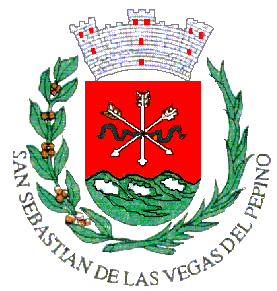 The coat of arms of San Sebastián incorporates religious, historical, and natural elements that represent the town’s identity.
- The three arrows represent the patron saint, Saint Sebastian the Martyr, whose martyrdom—according to tradition—occurred by arrows, a symbol preserved in the municipality’s heraldry since the town’s earliest seal.
- The red color of the shield, in addition to symbolizing the saint’s martyrdom, recalls that San Sebastián was the first town in Puerto Rico where blood was shed for national freedom, during the events of September 24, 1868, in the town square beside the parish church.
- The mountains, with silver borders, represent the characteristic mogotes known as “pepinos,” from which the municipality’s historic name derives.
- The mural crown is the heraldic insignia used to identify towns and cities, symbolizing the defense of municipal traditions and unity of purpose among residents.
- The branches of coffee and sugarcane represent the principal agricultural products of the areas where the population is settled.
Events
- Three Kings Day Festival – January
- Children`s Festival – January
- Patron Saint`s Festival – January
- Heifer`s Festival – January (first Sunday during the patron saint`s festival)
- Hammock Festival – July
- Lighting of the Christmas tree – November
- Cultural evenings – third Thursday of the month
- Farmer`s Market – every Friday
Points of Interest
- Guajataca Camp
- City Hall
- Casa de Doña Visa (built in 1914)
- Robles Waterfalls (Paraíso Perdido)
- Luis Rodríguez Cabrero Cultural Center
- Cerro del Sombrero
- Novilla Sculpturer
- Hacienda El Jibarito
- Guajataca Lake
- Parish of Saint Sebastian the Martyr
- September 24 Promenade
- Public Market Plaza
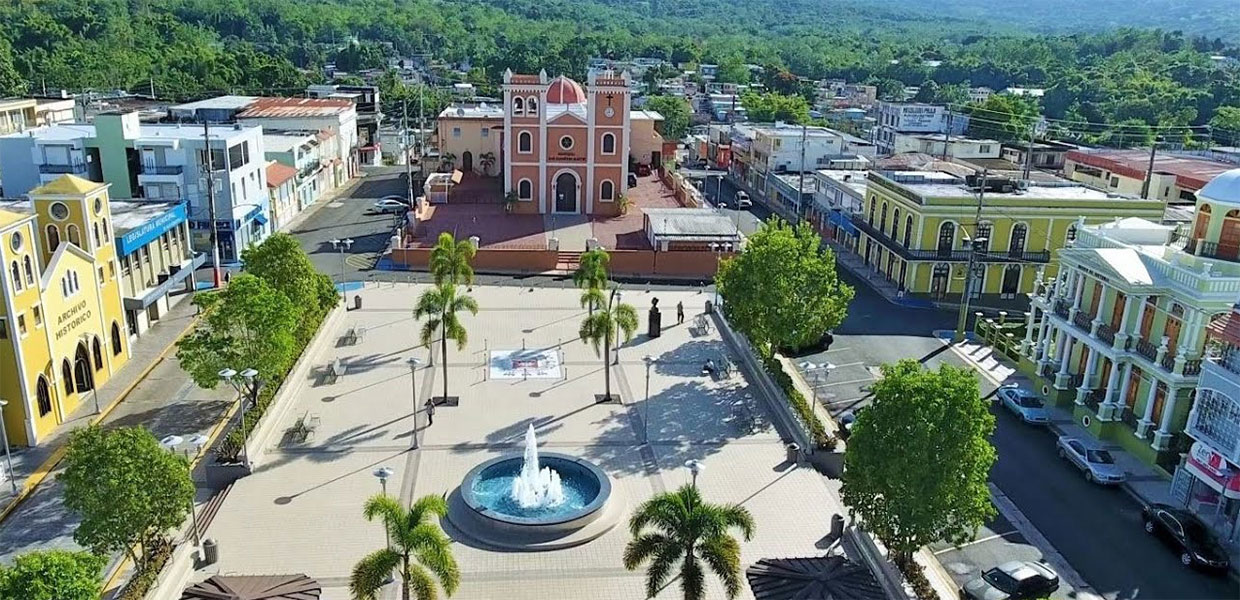
- Román Baldorioty de Castro Town Square
- Guajataca Reserve
- Ruins of Central Plata
- Collazo Waterfall
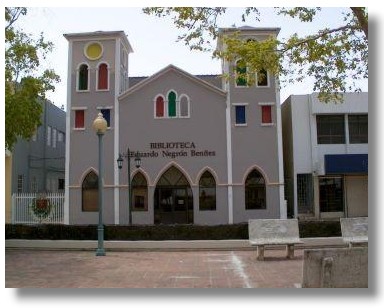
- Benito Fred Theater (home to the Office of Culture and Tourism)
Distinguished Citizens:
- Juan F. Acosta Arce – Composer and musician
- Salvador Arana Soto – Historian, physician, essayist, and short-story writer
- Margarita Castro Alberty – Internationally recognized soprano; performed at the New York Opera House
- Ángel Mislán Huertas – Bombardine virtuoso and notable composer
- Rafael Seguí Barrero – Composer, reciter, and poet
- Sinforoso Vélez Arocho – First Puerto Rican soldier to participate in World War I
- Nilita Vientós Gastón – Attorney; former president of the Ateneo Puertorriqueño (1946–1961); director of the literary magazine Asomante; founder of Sin Nombre; prominent defender of the Spanish language
Education
San Sebastián has public and private schools serving the elementary, middle, and high school levels. In addition, its proximity to municipalities such as Aguadilla, Mayagüez, and Arecibo facilitates access to universities and technical institutions.
Public Schools sorted by educational levels.
San Sebastian District
| Name | Level | Telephone | Address |
| AGUSTÍN ACEVEDO HERNÁNDEZ | Elementary | (787) 896-2105 | PO Box 4704 |
| AIBONITO BELTRÁN | Elementary | (787) 896-4362 | PO Box 977 |
| ÁNGEL GUERRERO LUGO | Elementary | (787) 896-2888 | PO Box 4704 |
| ÁUREA FUENTES MÉNDEZ | Elementary | (787) 896-4100 | PO Box 5220 |
| FRANCISCO LUGO ROSA | Elementary | (787) 280-0863 | HC-05 Box 42005 |
| GUILLERMO CARDE | Elementary | (787) 896-0199 | PO Box 1220 |
| INÉS MENDOZA | Elementary | (787) 280-1863 | PO Box 4704 |
| JOAQUÍN ORONOZ RODÓN | Elementary | (787) 896-1775 1680 | Ave. Emerito Estrada |
| JUAN CARDONA RODRÍGUEZ | Elementary | (787) 896-1425 | PO Box 4644 |
| JUANA B. GUZMÁN | Elementary | (787) 280-4072 | PO Box 662 |
| JULIO CANCEL (ANEXO) | Elementary | (787) 896-0115 | PO Box 1220 |
| JULIO CANCEL FACUNDO | Elementary | (787) 896-1072 | PO Box 1220 |
| MARÍA S. DEL RÍO | Elementary | (787) 896-0166 | Bo. Robles Carr. # 466 km 3 hm |
| MINIMA ORONOZ | Elementary | (787) 896-4669 | PO Box 7000 Suite 70 |
| PABLO CARDONA | Elementary | (787) 896-5940 | PO Box 4704 |
| PERCHAS RABEL I. | Elementary | (787) 896-6492 | PO Box 4704 |
| RAMÓN M TORRES | Elementary | (787) 896-1135 | PO Box 5443 |
| ERNESTINA MÉNDEZ | Intermediate | (787) 896-1745 | Suite 138 |
| NARCISO RABELL CABRERO | Intermediate | (787) 896-1164 | PO Box 1619 |
| PERCHAS ROSARIO | Intermediate | (787) 896-4497 | PO Box 4704 |
| EMILIO SCHARON RODRÍGUEZ | Secondary | (787) 896-4142 | PO Box 4691 |
| BERNARDO MÉNDEZ JIMÉNEZ | SSecondary | (787) 896-5980 | PO Box 1676 |
| CARMELO SERRANO CUBANO | Secondary | (787) 896-6810 | PO Box 1676 |
| MAXIMINO A. SALAS | Secondary | (787) 896-2838 | PO Box 2855 |
| NUEVA SUPERIOR VOCACIONAL | High School | (787) 896-1430 | PO Box 1277 |
| PATRIA LATORRE | High School | (787) 896-3970 | PO Box 5379 |
Hymn:
Lirics: Juan Avilés Medina
Music: Guillermo Figueroa
Van más de dos siglos de historia de vida,
vida con historia, siempre Florecida
de esperanzas nuevas, de anhelo y de afán,
con el gran prodigio de la Fe Cristiana
que abrió los caminos de ayer al mañana
bajo el nombre Augusto de San Sebastián.
Somos de los llanos, somos de la sierra,
somos de los valles, somos de la tierra
que lleva muy hondo clavada en su entraña
la feliz historia del Río Culebrinas, l
as nobles leyendas de hazañas taínas
y la historia escrita con sangre de España.
Tenemos orgullo, forjamos cultura,
labramos rencores, sentimos bravura,
guardamos amores en el corazón.
Pero en un instante, cultura y rencores,
bravura y ternura y orgullo y amores
se postran de hinojos a nuestro Patrón.
Deprisa vivimos la vida de día;
vamos al progreso con la gallardía
de un pueblo que marcha con paso seguro.
Y el Viejo Pepino de los pepinianos
sigue siendo el pueblo de miles
de hermanos que van siempre unidos.