Toa Alta, Puerto Rico
City of the Toa
Toa Alta (TO-ah AHL-tah) is known as “La Ciudad del Toa” (The City of the Toa), “Cuna de Poetas” (Cradle of Poets), “Los Ñangotaos”, and “Ciudad del Josco.” The word “Toa” comes from the Taíno name for the Río de la Plata. In their language, it means “mother” and was often written as “Thoa.” The town’s patron saints are Saint Ferdinand (San Fernando Rey) and Our Lady of the Conception (Nuestra Señora de la Concepción).
The municipality of Toa Alta borders Dorado and Toa Baja to the north, Bayamón to the east, Naranjito to the south, and Vega Alta and Corozal to the west.
Geographically, Toa Alta belongs to the eastern section of the region known as the Northern Coastal Plain (Llano Costero del Norte), a fertile alluvial plain historically vital for agriculture. It is also part of the karst zone (zona cársica), known for its unique limestone formations, natural caves, sinkholes, and characteristic mogotes.
The municipality is home to several dairy farms and is an important milk producer in Puerto Rico. It also hosts factories that manufacture scientific instruments, food products, clothing, leather goods, rubber, and plastic items, among others.
Entering the 21st century, Toa Alta became recognized for its liquor, textile, and electronics industries, as well as significant urban growth with the construction of new residential developments. Today, its economy is primarily industrial and commercial, supported by strong retail and service sectors.
Foundation
Toa Alta was founded in 1751 during the governorship of Agustín Parejas. The name “Toa” is said to come from the Taíno term for the Río de la Plata, meaning “mother.”
In 1511, the Spanish conquistador Juan Ponce de León established La Granja del Rey (The King’s Farm) on lands belonging to the Taíno chief Aramaná along the Río de la Plata, where a large indigenous population once lived. The first crops included cassava and sweet potatoes, and the river was rich in fish such as sardines, mullets, and snooks.
Flooding from the river forced settlers to move to higher ground, giving rise to what became the town of Toa Alta. By 1776, the municipality had around 100 houses and about 3,000 inhabitants. The local economy was based on cattle and horse ranching, as well as sugarcane and small-scale crop cultivation.
By 1853, Toa Alta had a stone church, a Casa del Rey (government building), and a walled cemetery.
Location
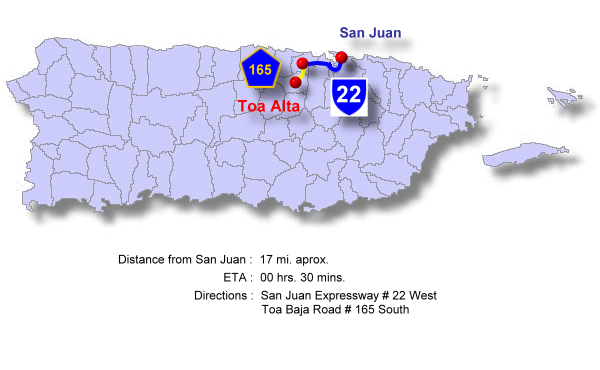
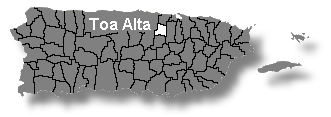 Its located in the nothern coast of the Island. It borders north with Dorado and Toa Baja, south with Naranjito, west with Vega Alta and Corozal and east with Bayamón.
Area:
71.08 km² of land and 0.20 km² of water (≈ 27.5 mi² total)
Population:
(2020): 66,852 inhabitants
Densidad Poblacional:
approximately 944.7 inhabitants per km²
Demonym:
Toalteños
Toa Alta is also known as:
- The City of the Toa
- Cradle of Poets
- Los Ñangotaos
- City of the Josco
Wards (Barrios): Toa Alta, Puerto Rico
Toa Alta consists of nine barrios, each with its own residential, rural, and community areas. According to the 2020 U.S. Census, the total population was 66,852.
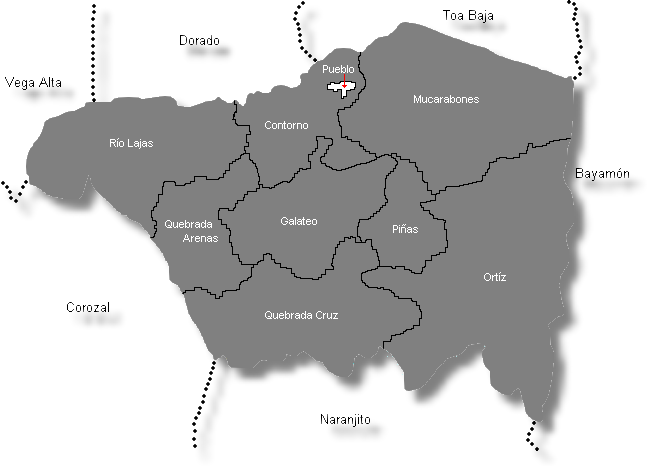
| Census 2020: Population by Wards - Toa Alta |
Population |
| Contorno | 5,326 |
| Galateo | 5,547 |
| Mucarabones | 20,081 |
| Ortíz | 22,883 |
| Piñas | 1,127 |
| Quebrada Arenas | 3,770 |
| Quebrada Cruz | 5,290 |
| Río Lajas | 2,181 |
| Toa Alta Town | 647 |
| Total | 66,852 |
Source: U.S. Census Bureau, 2020 Census (municipal data), barrio estimates based on ACS 2019–2023 aligned with the 2020 total.
Patron Saint and Main Parish
Patron: Saint Ferdinand (San Fernando Rey)
Parish: Parroquia San Fernando
Calle José de Diego #10
Toa Alta, PR 00954
Teléfono: 787-870-2585
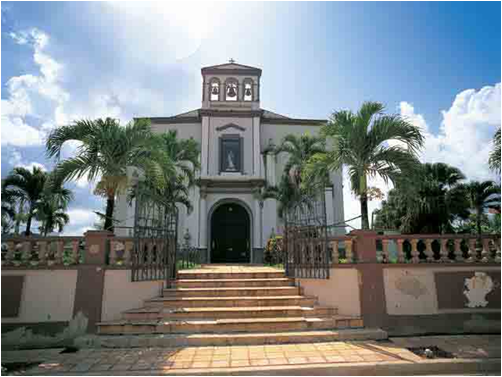
Founded in 1752, the Parish Church of San Fernando is one of the oldest in Puerto Rico and remains a central religious and historical monument in Toa Alta.
Topography
The terrain is mostly flat, with elevations under 100 meters above sea level. It forms part of the Northern Coastal Plain and the Karst Zone, where the distinctive limestone hills (mogotes) shape the landscape.
Hydrography
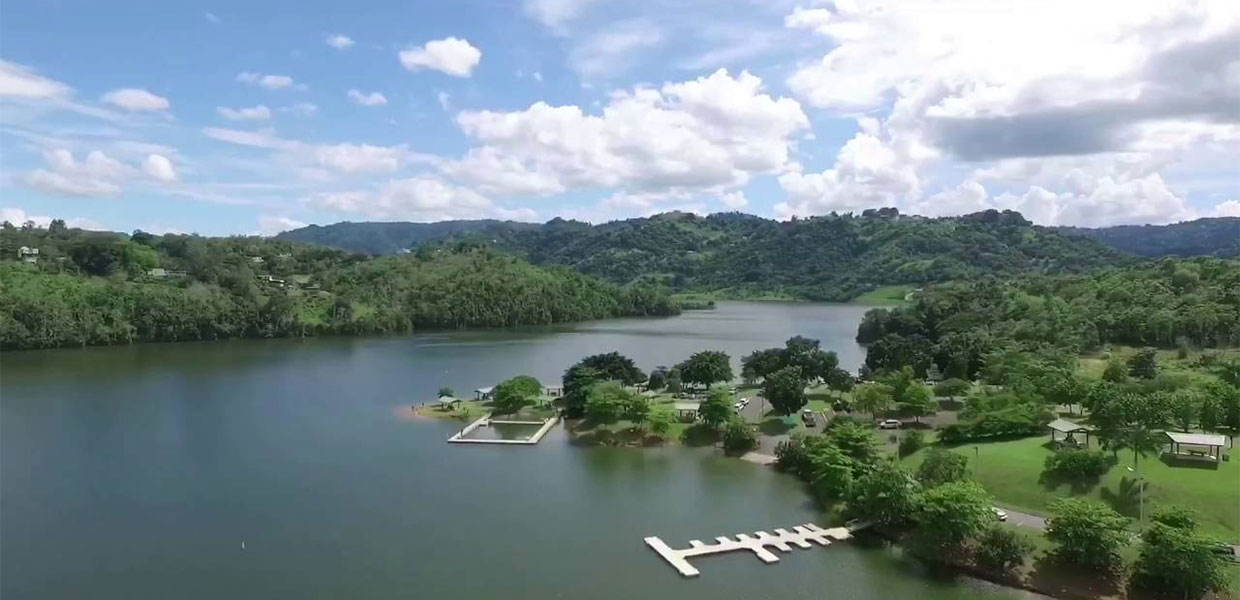
The Río de la Plata, Puerto Rico’s longest river, flows through the municipality, along with its reservoir, Embalse La Plata, one of the island’s main freshwater sources that supplies several northern and central towns. Other important water bodies include the Bucarabones River and the Arenas and Galateo streams. These are essential for agriculture, human consumption, and local biodiversity.
Economy and Main Industries
Toa Alta balances its agricultural roots with industrial and commercial development.
- Agricultural sector: Grade A milk production, minor fruits, and vegetables.
- Manufacturing: Leather goods, clothing, processed foods, and plastics.
- Commercial sector: Steady growth of small and medium-sized businesses, distribution chains, and retail services.
- Average weekly wage: Approximately $402, reflecting gradual growth since the 1990s and overall improvement in living standards.
Flag:
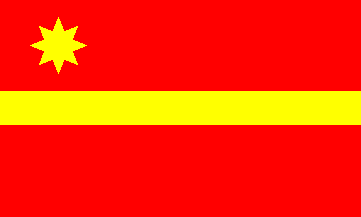 The flag of Toa Alta reflects the town’s identity and history. Its three horizontal stripes represent:
- Red (top and bottom): Courage, struggle, and resilience throughout history, especially during invasions and natural hardships like the Río de la Plata’s floods.
- Yellow (center): Natural wealth, sunlight over its plains, and prosperity through agriculture and livestock.
The eight-pointed yellow star in the upper left corner symbolizes unity, the legacy of local heroes José and Francisco Díaz, and the town’s bright future guided by progress and education. The star also recalls Toa Alta’s historic connection to river and maritime traditions tied to the Río de la Plata.
The flag is a symbol of community pride, raised during cultural, sports, and religious events to strengthen local identity.
Coat of Arms:
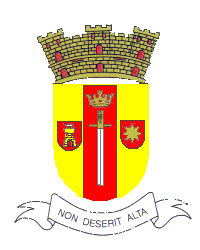 The coat of arms of Toa Alta combines heraldic elements that represent the town’s history, faith, and identity:
- Sword and crown: Represent justice, defense, and the authority of Saint Ferdinand, the town’s patron saint, linking Toa Alta to its Spanish heritage.
- Right escutcheon (tower and crescent): The golden tower stands for strength and protection; the silver crescent represents the Virgin Mary in her title of the Immaculate Conception, Toa Alta’s co-patroness, emphasizing the town’s deep religious tradition.
- Left escutcheon (eight-pointed star): Symbolizes light, guidance, and hope, honoring local heroes José and Francisco Díaz while reflecting the town’s cultural and intellectual contributions.
- Mural crown with three towers: A civic emblem denoting the category of “town” and symbolizing communal strength.
- Motto – “Non Deserit Alta”: Means “He does not abandon the high things,” representing resilience, dignity, education, and culture as the town’s guiding pillars.
The coat of arms unites history, geography, religion, and heroism into a single symbol of Toa Alta’s collective identity and enduring values.
Transportation and Infrastructure
Toa Alta has easy access to key northern highways, including PR-165, PR-861, and PR-824, connecting it with Bayamón, Toa Baja, and Dorado. Public transport includes intermunicipal routes and local buses.
Recent urban development has brought new housing projects, shopping centers, and road infrastructure improvements.
Tourism and Points of Interest
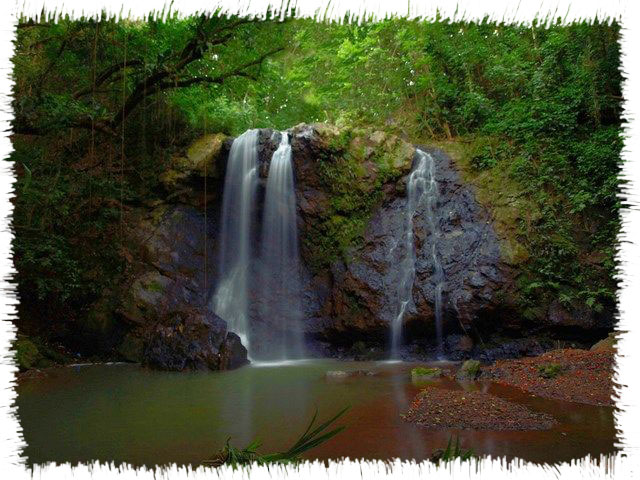
- Yolanda Waterfall: Natural attraction ideal for ecotourism and photography.r
- Parroquia San Fernando Rey: Historic and religious landmark.
- Statue of Masso Rivera
- Masso Rivera Municipal Theater: Cultural venue hosting events year-round.
- Egozcué Recreational Plaza: Central social space for festivals, fairs, and concerts.
- Villa Tropical Recreation Center and the Legendary Tree: Family-friendly natural areas.
- La Plata Reservoir: Destination for fishing, kayaking, and birdwatching.
Environment and Conservation
Toa Alta lies within the Río de la Plata Basin, a vital ecosystem for the island’s water balance. Its forested and karst areas protect key aquifers and endemic species. The local government works with Puerto Rico’s Department of Natural and Environmental Resources (DRNA) on environmental education, river cleanup, and reforestation programs.
Culture and Traditions (Events)
Toa Alta preserves rich cultural traditions through its music, poetry, and festivals.
- Patron Saint Festivities: May, in honor of Saint Ferdinand.
- Maratón de la Chopa: March, promoting health and local tourism.
- Festival of Traditional Music: November, honoring Tomás Rivera Morales (Masso Rivera), the renowned Puerto Rican cuatro player from Toa Alta.
The town is also home to notable figures in music, literature, and politics—earning its title as the Cradle of Poets.
Notable Figures
- José Pablo Morales Miranda – Journalist who wrote about politics, economics, history, and literature; member of Puerto Rico’s Provincial Council in the mid-19th century.
- Tomás Rivera Morales (Masso Rivera) – Renowned Puerto Rican cuatro player.
- Pablo Morales Cabrera – Short story writer, essayist, teacher, farmer, and journalist; former member of the House of Representatives.
- Juan Valldejuli Rodríguez – Essayist.
- Ramón Rivera Valentín – 20th-century senator.
- Dayanara Torres – Miss Universe 1993.
Public Schools sorted by educational levels.
Toa Alta District
| Name | Level | Telephone | Address |
| ALEJANDRO JR. CRUZ | Elementary | (787) 870-1665 | PO Box 899 |
| HERACLIO RIVERA COLÓN | Elementary | (787) 870-3406 | PO Box 1311 |
| JOSÉ DE DIEGO | Elementary | (787) 797-0651 | PO Box 1311 |
| JOSÉ M. DEL VALLE | Elementary | (787) 797-5375 | PO Box 1311 |
| LUIS MUÑOZ RIVERA | Elementary | (787) 870-3898 | PO Box 1311 |
| MANUEL VELILLA | Elementary | (787) 797-3558 | PO Box 1311 |
| MARÍA C. OSORIO | Elementary | (787) 799-3562 | Urb.Toa Alta Heights |
| MERCED MARCANO | Elementary | (787) 870-0309 | PO Box 1080 |
| SECUNDINO DÍAZ | Elementary | (787) 870-3404 | PO Box 1080 |
| VIOLANTA JIMÉNEZ | Elementary | (787) 870-1378 | PO Box 1285 |
| VIRGILIO MORALES | Elementary | (787) 870-1150 | Bda. Arenas |
| ABELARDO DÍAZ ALFARO | Intermediate | (787) 797-0315 | RR 3 Box 10190 |
| FELIPE DÍAZ GONZÁLEZ | Intermediate | (787) 870-2500 | PO Box 1311 |
| JOSÉ PABLO MORALES | Intermediate | (787) 870-2135 | PO Box 1318 |
| AGRÍCOLA DE BUCARABONES | PS - OTHERS | (787) 780-0615 | PO Box 1311 |
| NICOLÁS SEVILLA | High School | (787) 870-2570 | PO Box 1311 |
| TOA ALTA HEIGHTS | High School | (787) 279-8282 | PO Box 391 |
Hymn:
By Israel Rivera Náter
¡Cuna de historia y de grandes poetas;
Así es mi valle de verde tambor;
Valle hermosísimo, donde Abelardo
cinceló en lágrimas su gesta de amor!
¡Valle de luchas y de profundo llanto
donde Morales, nuestro héroe y cantor;
esculpió en letras de oro y de sangre
la libertad sagrada en nuestro corazón!
¡Oh Toa Alta, mi pueblo inmortal
tu gente levanta con orgullo
la radiante bandera de tu fundación!
¡Oh Toa Alta, mi pueblo inmortal
me abrazaré a tu escudo,
a la tierra y al honor!
Cuna de hermosas mujeres.
¡Oh tierra josca de mi ensoñación;
donde las cuerdas de un cuatro
encantado remolinó a los pájaros
y éstos en su empeño despertaron a Dios.
Revolcaron la cama
de un noble trovador
que una tarde de lluvia
le regaló una décima
como ofrenda de amor.
Vivan por siempre, por siempre vivan,
la raza, el empeño y el amor.
Vivan la fauna, el cielo, la montaña y el valle
en que se bañan con tus noches estrelladas
que amanecen galanas con la hermosa
sonrisa del inolvidable sol.