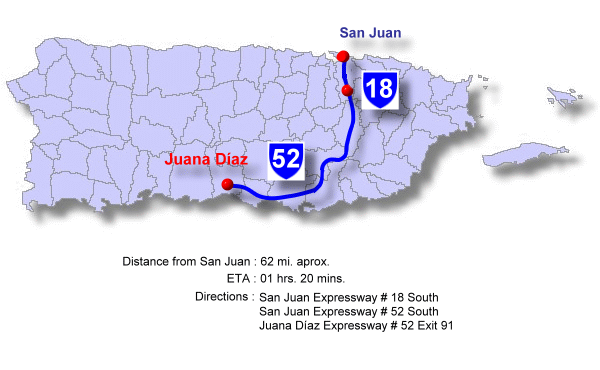
Juana Díaz, Puerto Rico
The City of Mabí
Juana Díaz (HWAH-nah DEE ahz) is known as “The City of Mabí,” “The City of Jacaguas,” “The City of Kings,” and “The Bethlehem of Puerto Rico”. The municipality blends history, religious traditions, and natural richness. It is especially famous for its Three Kings Day celebration, a centuries-old tradition that stands out across the island and attracts visitors from Puerto Rico and abroad. Its patron saint is Saint Raymond Nonnatus, whose feast is celebrated every August 31 with processions, cultural activities, and community gatherings.
Located in the southern region of Puerto Rico, Juana Díaz borders Ponce to the west, Jayuya, Villalba, and Ciales to the north, Coamo and Santa Isabel to the east, and the Caribbean Sea to the south. Its territory combines coastal plains and semi-arid hills, sitting atop a geological fault that gives it varied relief. The area receives moderate rainfall throughout the year, and its soils are suitable for both agriculture and the extraction of natural resources.
The municipality features diverse topography, including valleys, plains, and coastal zones, as well as notable elevations in the north, such as Cerro de las Cuevas, approximately 638 meters high, and La Mesa and Agostinillo hills, which reach around 580 meters. These features allow for the coexistence of agricultural, residential, and natural areas within the territory of Juana Díaz.
Today, Juana Díaz stands out as an important marble producer, with several quarries providing slabs and aggregates for the construction industry. Former sugar plantations have been repurposed for growing tropical fruits such as mango and avocado, as well as vegetables, legumes, and livestock farming. This agricultural diversification reflects the municipality’s adaptability and its ability to sustain economic activity while preserving its natural and cultural heritage.
History and Foundation of Juana Díaz
The town we know today as Juana Díaz began as a small village along the historic Jacaguas River around the year 1582, according to records by historian Fray Íñigo Abad y Lasierra. At that time, private property did not exist as we know it today; the lands were managed as royal estates (hatos reales) under Spanish decree, with authority centralized in Coamo.
Before its formal founding, the region experienced attacks by Carib indigenous groups, which resulted in the deaths of several inhabitants, including the husband of Doña Juana Díaz. After becoming a widow, she settled in the area and began cultivating the Hato Jacaguas, named in honor of the Taíno chief Jacaguax, managing about 16 cuerdas of land under usufruct. Her main activities included raising cattle and pigs, as well as growing small crops—laying the foundations for the local economy.
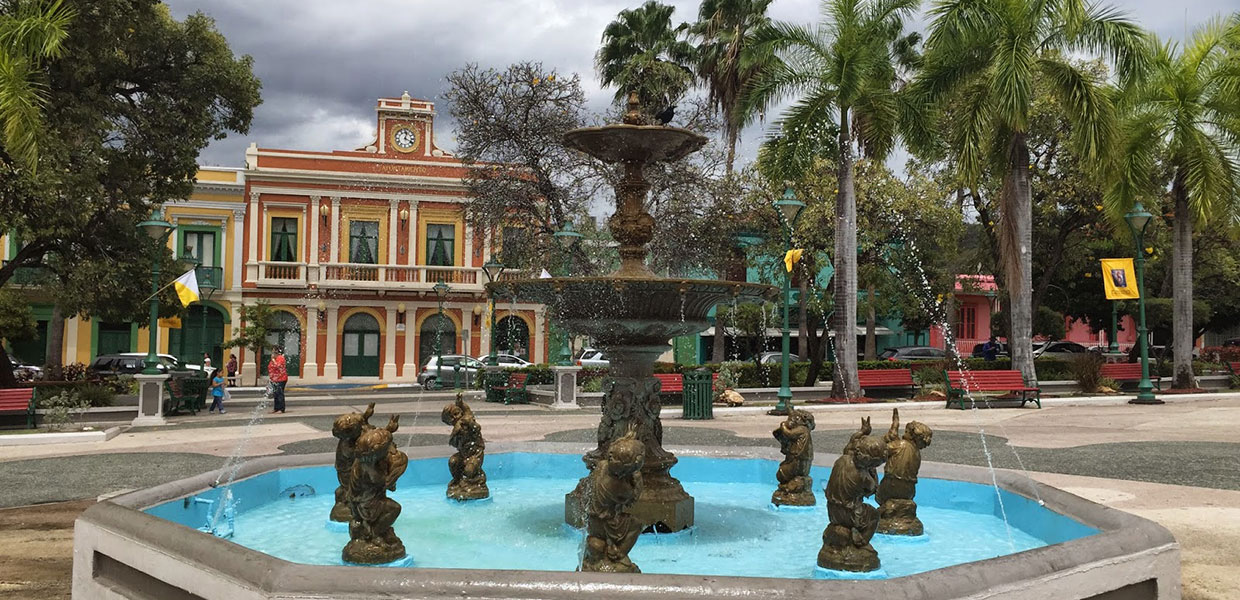
Although Doña Juana Díaz had already passed away by the time the village was officially established as a municipality in 1798, her name was preserved in recognition of her role in managing the estate. By the late 18th century, the area was known as the “Versailles of Ponce” due to its green countryside, crystal-clear rivers, and abundant vegetation—features that impressed travelers of the time. The town’s central fountain, located near the main plaza, was a popular gathering place admired for its beauty.
Civil government in the new municipality was officially established on April 25, 1798, while the San Ramón Nonato Parish had been founded a month earlier, in March, under the supervision of Don Tiburcio Rodríguez, whose descendants later settled in the Collores neighborhood. At that time, Juana Díaz had approximately one thousand inhabitants.
The municipality’s original neighborhoods were distributed as follows:
- To the north: Lomas Guayabal, Villalba Arriba, Villalba Abajo, Hato Puerco Arriba, Hato Puerco Abajo, Caonillas Arriba, Caonillas Abajo, and Vacas.
- To the south: Amuelas, Sabana Llana, Cintrona, and Capitanejo.
- To the east: Tijeras, Río Cañas Arriba, Río Cañas Abajo, and Emajagual.
- To the west: Jacaguas, Callabo, and Collores.
During the 19th century, Juana Díaz became an important sugarcane producer, with several mills and refineries processing molasses and sugar, including La Luciana, Cristina, Ponceña, Serrano, Amelia, Potala, Cintrona, and Úrsula. After the Spanish-American War of 1898, Puerto Rico came under U.S. sovereignty, and Juana Díaz entered a new chapter under American administration. Its first recorded mayor was Espartani Franceschi.
In 1917, with the creation of the municipality of Villalba, several of Juana Díaz’s neighborhoods—such as Villalba Arriba, Villalba Abajo, Hato Puerco Arriba and Abajo, Caonillas Arriba and Abajo, and Vacas—became part of Villalba’s jurisdiction, thus reorganizing the territorial distribution of Juana Díaz.
Location:
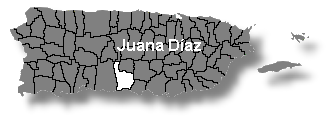 Juana Díaz is located on the southern coast of Puerto Rico, a strategic position that combines access to the Caribbean Sea with proximity to important inland municipalities. It borders Orocovis, Jayuya, Ciales, and Villalba to the north; Coamo and Santa Isabel to the east; Ponce to the west; and the Caribbean waters to the south. This location gives the municipality a warm and humid climate along the coast and cooler temperatures in the northern hills.
Area:
157.5 km² (60.6 square miles)
Population:
46,538 (2020 Census)
Population Density:
Approximately 320 people per km² (830 per square mile)
Demonym:
Juanadinos
Nicknames:
The City of Mabí
The City of Jacaguas
The Bethlehem of Puerto Rico
Barrios of Juana Díaz, Puerto Rico
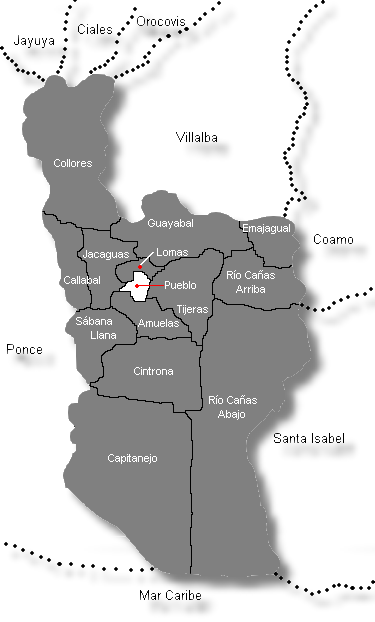
| Census 2020: Population by Wards - Juana Díaz |
Population |
| Amuelas | 4,056 |
| Callabo | 2,206 |
| Capitanejo | 5,328 |
| Cintrona | 2,309 |
| Collores | 2,161 |
| Emajagual | 3 |
| Guayabal | 5,774 |
| Jacaguas | 4,522 |
| Juana Díaz Town | 4,555 |
| Lomas | 1,358 |
| Río Cañas Abajo | 2,848 |
| Río Cañas Arriba | 2,165 |
| Sabana Llana | 7,964 |
| Tijeras | 5,640 |
| Total | 46,538 |
Source: Censo 2020
Patron:
San Ramón Nonato
San Ramón Nonato Parish
Aptdo. 1426. Juana Díaz, P.R. 00795
(787) 837-2390
Parish: Tel. 837-2193
Mass Schedule:
Monday thru Friday - 7:00 a.m. & 7:00 p.m.
Saturdays & Sundays - 6:30 a.m., 8:00 a.m., 10:00 a.m., & 6:30 p.m.
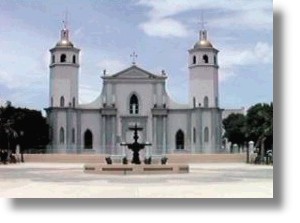
Topography:
Juana Díaz is mainly situated in the Southern Coastal Plain region, characterized by extensive flat areas suitable for agriculture and urban development. Toward the north, the terrain becomes more rugged with notable elevations:
- Cerro de las Cuevas: 638 meters (2,093 feet)
- Cerro La Mesa: 580 meters (1,903 feet)
- Cerro Agostinillo: 580 meters (1,903 feet)
These hills provide scenic diversity and influence the local climate and the distribution of rivers and streams.
Hydrography:
The municipality has a varied water system, including rivers and reservoirs:
- Main Rivers: Jacaguas, Descalabrado, and Inabón
- Tributaries: Río Guayo (Inabón tributary), Río Toa Vaca (Jacaguas tributary)
- Notable Streams: Chorrera and Guanábana
- Reservoirs: Lago Ponceña, used for agricultural irrigation and potable water supply
This water system is vital for local agriculture and the conservation of regional ecosystems.
Main Industries
Juana Díaz has maintained a diversified economy over the centuries. Currently, it is notable for:
- High-Quality Marble Production: Four active quarries provide slabs, gravel, and aggregates for construction, recognized for their purity and durability.
- Agriculture: Former sugar plantations have been converted to tropical fruit crops, including mango, avocado, and legumes, as well as livestock farming in rural areas.
- Historical Mining: In the early 20th century, manganese was extracted in some areas, while sugar mills, such as the old Central Boca Chica, remain in ruins today as witnesses to the municipality’s industrial heritage.
Economy and Wages
The average wage recorded in the region at the end of the 20th century was approximately $251.70 per week (1998). Although current wages have evolved, the municipality still maintains a mix of agricultural, industrial, and commercial jobs that sustain the local economy.
Flag of Juana Díaz
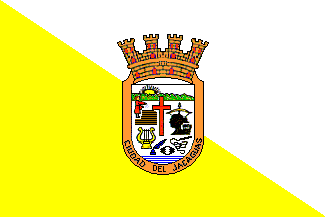 The flag of Juana Díaz has a rectangular design composed of two diagonal triangles:
- Upper White Triangle: Symbolizes purity and silver, representing the historical and cultural wealth of the municipality.
- Lower Yellow Triangle: Represents gold, prosperity, and the natural richness of the region.
- Center: Features the official coat of arms, which displays the colors and symbols representing the identity, history, and heritage of Juana Díaz.
Coat of Arms of Juana Díaz
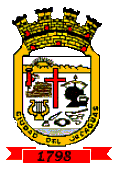 The municipal coat of arms is full of symbolic elements that narrate the history and culture of Juana Díaz:
- Mountains: Thirteen hills represent the thirteen barrios of the municipality and the mineral wealth of the area, including commercial production of high-quality marble, manganese, gypsum, and limestone for construction.
- The Sun: Signifies a new horizon and hope, with thirteen rays representing each barrio.
- The Woman: Evokes Doña Juana Díaz, the founder, sowing thirteen grains of corn over thirteen furrows, symbolizing the seed of the town’s growth. She is depicted in colonial-era attire.
- The Indigenous Figure: Represents the original inhabitants of the region before the arrival of the colonizers, highlighting Chief Jacaguax, after whom the Jacaguas River was named. The figure carries a bow and thirteen arrows, symbolizing community defense and survival.
- Harp and Ancient Quill: Symbolize the music and poetry of Juana Díaz, home to poets and writers such as Luis Lloréns Torres, Tomás Carrión Maduro, Luis Felipe Dessús, Soledad Lloréns Torres, Mario Braschi, Cesáreo Rosa Nieves, and Arturo Gómez Costas.
- Green Peak Band: Represents the Tres Picachos, the greenery of the fields, and the Virgin of Monserrate (Monte Serrado), patroness of Jayuya.
- Sun of Jayuya: A unique Taíno petroglyph from Jayuya, included at the bottom of the coat of arms as a symbol of indigenous heritage.
This coat of arms reflects the union of nature, history, and culture, highlighting the unique identity of Juana Díaz in Puerto Rico.
Events and Celebrations in Juana Díaz
- Children’s Day – January: Celebration dedicated to the youngest residents, featuring cultural and recreational activities.
- Three Kings’ Festival – January: A centuries-old tradition promoted by Father Valentín Echevarría in 1884 and revitalized in 1940 by Father Ramiro García Rey. Includes parades with the Three Wise Men and shepherds, along with medieval-style dialogues explaining the symbolism of gold, frankincense, and myrrh.
- Tribute to Lovers – February: Cultural and romantic activities in the municipality’s plazas and parks.
- Llorens Week – April: Commemoration of the founding of Juana Díaz and tribute to the poet Luis Lloréns Torres.
- Mother’s Day Tribute – May: Events and activities honoring mothers from Juana Díaz.
- Father’s Day Tribute – June: Celebrations dedicated to fathers in the municipality.
- Patron Saint Festivities of San Ramón Nonato – August: Religious and cultural festivities in honor of Juana Díaz’s patron saint.
- Coastal Festival and Regatta – August: A maritime event celebrating the municipality’s proximity to the Caribbean Sea.
- Puerto Rican Heritage Month – November: Recitations, art exhibitions, and cultural events highlighting Puerto Rican identity.
- Christmas Lighting – December: Festive illumination of plazas and public spaces.
- Nativity of Juana Díaz – December: Unique Christmas installation created by Dr. Enrique Marrero, featuring over forty-foot structures representing ancient Israeli architecture, vegetation, animals, and shepherd figures, made with plaster, wood, and fiberglass. Located at 2 Mariano Abril Street.
- Bohemia in the Plaza – Last Sunday of Each Month: Musical performances by the municipal orchestra.
Points of Interest in Juana Díaz
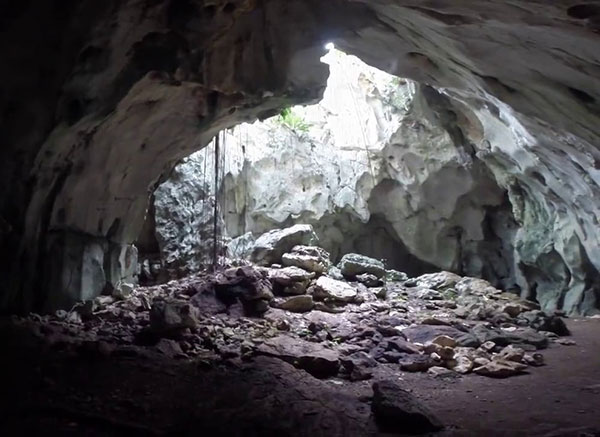
Juana Díaz offers a mix of history, culture, and eco-tourism:
- Cueva Lucero: Archaeological site with Taíno petroglyphs and pictographs of great cultural significance.
- Bosque de Piedra (Stone Forest): Area in the Guayabal barrio with ancient rocks, historically known as the “Cemetery of Stones,” currently under eco-tourism development.
- Barrio Collores: Famous for the poem Valle de Collores by Luis Lloréns Torres.
- Casa Museo de los Reyes: Cultural space preserving the tradition of the Three Kings’ Festival.
- Guayabal Lake and Dam: Recreational and natural area.
- Monument to the Holy Kings: Symbol of the historic Three Kings’ Festival.
- Children’s Park: Recreational space for family activities.
- Paseo Lineal Jardines de Santo Domingo: Ideal for walks and cultural events.
- Paseo-Tablado in Camboya Sector: Space for music and local entertainment.
- Luis Lloréns Torres Plaza: Tribute to the famous poet from Juana Díaz.
- Román Baldorioty de Castro Plaza: Social and cultural center of the municipality.
- Veterans’ Plaza: Monument honoring war veterans.
- Salto de Collores: Natural waterfall ideal for local tourism.
- Santuario de Schoenstatt: Founded in 1988 by German José Ketenich, dedicated to the Virgin of the Immaculate Conception.
Notable Figures from Juana Díaz
Juana Díaz has been the birthplace of prominent individuals in literature, politics, sports, and culture:
- Carlos Bernier: Professional baseball player, played in Major League Baseball with the Pittsburgh Pirates in 1953.
- Mario Braschi: Journalist and literary critic, founder of the newspapers Don Severo Canta Claro and El Heraldo del Trabajo.
- Tomás Carrión Maduro: Poet, journalist, and politician; legislator in the Puerto Rico House of Delegates and author of works such as Cumba and Ten con ten.
- Luis Felipe Dessús: Politician, poet, and journalist; founder of the magazine Pancho Ibero.
- Father Ramiro García Rey: Spanish priest, promoter of the modern Three Kings’ Festival, and founder of Colegio San Ramón.
- Arturo Gómez Costas: Essayist, poet, and executive director of the Puerto Rico Academy of Arts and Sciences.
- Zoilo Gracia Zayas: Educator, creator of “second units” for rural schools.
- Luis Lloréns Torres: Poet, lawyer, and legislator; founder of the Revista de las Antillas and author of Valle de Collores.
- Soledad Lloréns Torres: Recognized poet and writer.
- Roberto Monclova: Historian and athlete, creator of a private museum on the history of Juana Díaz.
- Cesáreo Rosa Nieves: Musician and poet, Ph.D. in Philosophy and Letters, recipient of the Cervantes Medal and Roosevelt Medal.
- Emilia Villalonga de Armstrong: Writer and poet, known by the pseudonym Azucena.
Public Schools sorted by educational levels.
Ponce Region
Juana Díaz District
| Name | Level | Telephone | Address |
| Elementary | |||
| CARMEN FLORES | K-6 | (787) 837-6221 | PO Box 30060, P.R. 00795-0000 |
| DR. PEDRO ALBIZU CAMPOS | K-3 | (787) 260-0406 | PO Box 1412, P.R. 00795-0000 |
| FRANCISCO ZENÓN LAPORTE | K-3 | (787) 260-0118 | PO Box 932, P.R. 00795-0000 |
| JOSÉ A. GONZÁLEZ | K-6 | (787) 260-6326 | HC 1 Box 30060, P.R. 00795-0000 |
| JOSÉ J. RODRÍGUEZ | K-3 | (787) 837-3027 | PO Box 932, P.R. 00795-0000 |
| JUAN RAYMUNDO GARCÍA | K-5 | (787) 260-5932 | PO Box 932, P.R. 00795-0000 |
| JUAN SERAPIO MANGUAL | K-6 | (787) 837-8515 | PO Box 3501 Suite 276, P.R. 00795-0000 |
| JUANITA RIVERA | K-5 | (787) 260-2503 | PO Box 932, P.R. 00795-0000 |
| LUZ E. CORREA | K-6 | (787) 260-0418 | PO Box 3501 Suite 331, P.R. 00795-0000 |
| MANUEL FERNÁNDEZ JUNCOS | PK-6 | (787) 837-2249 | PO Box 846, P.R. 00795-0000 |
| RAMÓN ENRIQUE ORTIZ | K-5 | (787) 260-4671 | PO Box 1401, P.R. 00795-0000 |
| ROSA M. ZAMBRANA | K-4 | (787) 837-5276 | PO Box 1401, P.R. 00795-0000 |
| RUTHERFORD B. HAYES | 4-6 | (787) 837-2336 | PO Box 1404, P.R. 00795-0000 |
| SANTIAGO COLLAZO PÉREZ | 4-6 | (787) 837-6208 | PO Box 1412, P.R. 00795-0000 |
| Intermediate | |||
| FELIPE COLÓN DÍAZ | 7-9 | (787) 837-2365 | PO Box 3500 Suite 155, P.R. 00795-0000 |
| Secondary | |||
| DR. MÁXIMO DONOSO SÁNCHEZ | 7-12 | (787) 260-4694 | PO Box 1407, P.R. 00795-0000 |
| LUIS MUÑOZ MARÍN | 7-12 | (787) 837-8151 | PO Box 3501 Suite 274, P.R. 00795-0000 |
| ESCUELA NUEVA BARRIO JACAGUAS | K-9 | PO Box 1401, P.R. 00604-0000 | |
| SU SALVADOR BUSQUETS | K-9 | (787) 260-1963 | PO Box 1796, P.R. 00795-0000 |
| SU TOMÁS CARRIÓN MADURO | K-9 | (787) 837-0587 | PO Box 3501327, P.R. 00795-0000 |
| SU ZOILO GRACIA | K-9 | (787) 837-0544 | PO Box 6, P.R. 00780-0000 |
| High School | |||
| CARMEN BELÉN VEIGA | 10-12 | (787) 837-2435 | PO Box 982, P.R. 00795-0000 |
Hymn:
By Prof. José Rafael Gilot
Juanadinos, alcemos las voces
en un himno para esta ciudad.
De poetas y atletas la cuna
y una historia que la hace inmortal.
Gloria a tí, Juana Díaz,
del Jacaguas jardín sin igual,
Gloria a tí, Juana Díaz,
tus blasones debemos honrar.
Juanadinos digámosle al mundo
nuestro suelo es todo esplendor.
Por su noble hidalguía de pueblo
lo bendijo la mano de Dios.