Isabela, Puerto Rico
The Northwestern Garden
Isabela (ee-sah-BAI-lah) is a municipality known for its natural beauty, culture, and traditions. Called “The Garden of the Northwest,” it is also nicknamed “Los Gallitos” and “The Town of Quesitos de Hoja,” famous for its artisanal cheese wrapped in banana leaves. Its patron saint is Saint Anthony of Padua, whose feast day is celebrated every June 13, reflecting the importance of faith and community life in the municipality.
Located in the Northern Coastal Plains, Isabela combines beaches, agricultural plains, and mountainous hills, with the Aymamón Mountains to the south—an extension of the Jaicoa Range—and coasts washed by the Atlantic Ocean to the north. The region stands out for its karst topography, which includes mogotes, sinkholes, and caves, as well as unique natural formations such as the Jacinto Pool, making it an ideal destination for ecotourism and outdoor activities.
Foundation of Isabela
The area now known as Isabela was originally under the domain of Chief Mabodomaca, one of the most important indigenous leaders on the island before colonization. There was a large cattle ranch called San Antonio de la Tuna, which occupied vast lands now part of Isabela, Camuy, and Quebradillas, with its center along the Guajataca River.
Around 1725, Governor José Antonio de Mendizábal y Azares authorized the establishment of a formal settlement in the ranch. As was customary, this occurred after building a small chapel dedicated to Saint Anthony, around which a village began to form. By the late 18th century, when Friar Iñigo Abbad y La Sierra visited the area, San Antonio de la Tuna had a church, over sixty homes, and approximately 1,200 inhabitants—a significant population for that era.
In the early 19th century, around 1818, the residents, encouraged by Bishop Mariano Rodríguez Olmedo, gave powers to Pablo Corchado to request Governor Salvador Meléndez to relocate the settlement closer to the coast. The new town would be called Isabela, in honor of Queen Isabella of Castile. The request was approved, and the town was officially founded on May 21, 1819. That same year, construction began on the main church, completed sixteen years later, establishing the religious and community center of the town.
Originally, the region’s economy focused on cattle raising, which continued even after the town’s relocation. With the establishment of Isabela in its current location, sugarcane, coffee, tobacco, and minor crops were also promoted, laying the foundations for local agriculture. In 1918, a strong earthquake that affected western Puerto Rico damaged the church, which was later rebuilt, maintaining its importance as a historical and religious symbol for the community.
Location:
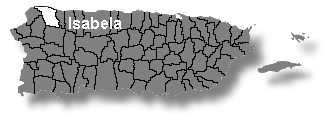 Borders the Atlantic Ocean to the north, San Sebastián and Moca to the south, Aguadilla to the west, and Quebradillas to the east.
Area
145.6 km² (56.0 sq mi)
Population
42,943 (2020 Census)
Population Density
305 people/km² (794/sq mi)
Demonym
Isabelinos
Nicknames
- The Garden of the Northwest
- Los Gallitos
- The Town of Quesitos de Hoja
These nicknames reflect the cultural identity, agricultural and livestock traditions, and historical reputation of Isabela within Puerto Rico.
Neighborhoods: Isabela, Puerto Rico
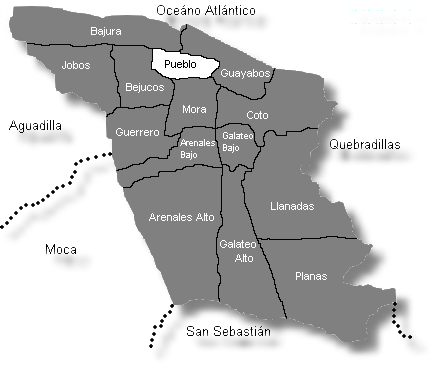
| Census 2020: Population by Neighborhood - Isabela |
Population |
| Arenales Altos | 5,002 |
| Arenales Bajos | 2,422 |
| Bajura | 249 |
| Bejucos | 5,793 |
| Coto | 3,194 |
| Galateo Alto | 1,269 |
| Galateo Bajo | 896 |
| Guayabos | 2,332 |
| Guerrero | 1,835 |
| Isabela Town | 6,463 |
| Jobos | 3,144 |
| Llanadas | 1,812 |
| Mora | 1,385 |
| Planas | 1,661 |
| Total | 42,943 |
Source: Censo 2020
Patron Saint
San Antonio de Padua
Parish: San Antonio de Padua
Address: P.O. Box 525, Isabela, P.R. 00662-0525
Phone: (787) 872-2563
Year of Foundation: 1835
Feast Day: June 13
Mass Schedule:
- Daily: 6:45 a.m. and 7:00 p.m.
- Saturdays: 7:00 p.m.
- Sundays: 7:00 a.m., 10:30 a.m., and 7:00 p.m.
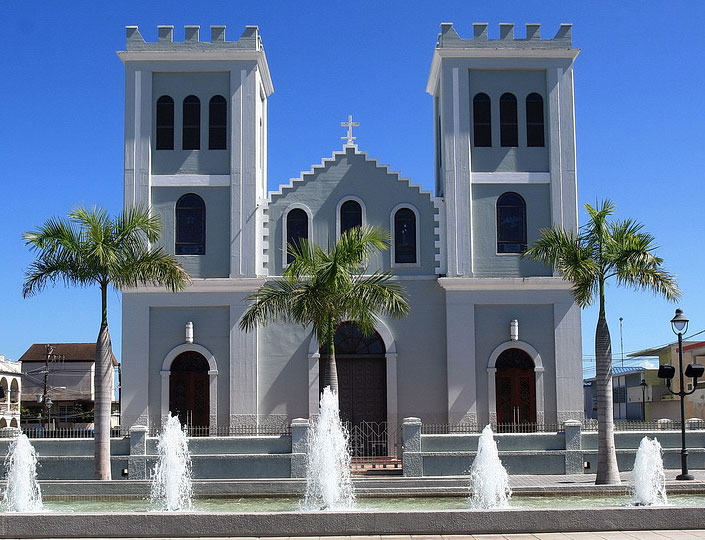
The parish is a historical and cultural landmark, serving as a center for religious celebrations and traditional festivities that reflect the town’s spiritual identity.
Topography
Isabela is located in the Northern Coastal Plains, with varied terrain that combines low coastal lands and mountainous elevations to the south. The southern part of the municipality is dominated by the Aymamón Mountains, an extension of the Jaicoa Range. Notable hills include:
- La Bandera (Galateo Alto): 368 m / 1,207 ft
- La Silla (Arenales Alto): 337 m / 1,106 ft
- El Sombrero (Galateo Alto): 330 m / 1,083 ft
- Cerro del Indio (Planas): 310 m / 1,017 ft
- Monte Encantado (Arenales Altos): 280 m / 919 ft
The central area of the municipality does not exceed 200 m (656 ft), and the coastal zone is lower, offering a combination of flat and mountainous landscapes.
Hydrography
Isabela is in the Northern or Atlantic Watershed. Major water bodies include:
- Guajataca River: marks the eastern border of the municipality, separating Isabela from Quebradillas.
- La Sequía Creek: tributary of the Guajataca, originating in Llanadas and flowing into the boundary between Coto and Llanadas.
- Los Cedros and del Toro Creeks: flow directly into the Atlantic Ocean.
These rivers and creeks are essential for agriculture, fishing, and local ecosystem conservation.
Climate
- Annual precipitation: 62.8 inches
- Average temperature: 84.7°F
The humid tropical climate favors agriculture, biodiversity, and coastal tourism, with warm temperatures and rainfall distributed throughout the year.
Major Industries
- Tourism: focused on beaches, rivers, and natural attractions such as Jacinto Pool and Guajataca State Forest.
- Manufacturing: footwear, dairy products, and leather goods.
- Agriculture and livestock: cassava, sugarcane, coffee, tobacco, and cattle raising.
The combination of industry and tourism makes Isabela an important economic hub in northwest Puerto Rico.
Average Wage
$232.80 weekly (historical, 1998). Current incomes have varied with the growth of tourism and industrial sectors, but this reflects the municipality’s economic base at the end of the 20th century.
Flag
 The Isabela flag derives its design, colors, and symbolism from the municipal coat of arms. It consists of three horizontal stripes of equal width:
- Side stripes: yellow
- Center stripe: green
- Center: may optionally feature the Isabela coat of arms
The design reflects the history, culture, and natural wealth of the municipality, with colors symbolizing land, agriculture, and indigenous heritage.
Coat Of Arms
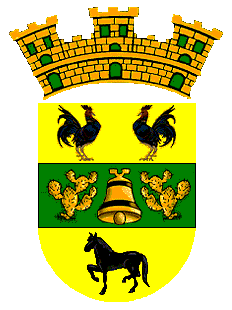 The Isabela coat of arms is divided horizontally into three stripes of equal width:
- Outer stripes: gold
- Center stripe: olive green
Symbolism:
- Olive green: represents the first inhabitants of Isabela and Puerto Rico, the Igneris Indians, established around the 9th century.
- Gold: symbolizes the Taínos, who built settlements around 200 years before the island’s discovery and extensively worked gold.
- Golden bell between two cactus plants: refers to the San Antonio de la Tuna chapel, now in ruins, and the historical origin of the town along the Guajataca River.
- Roosters: represent the famous fighting roosters of Isabela and symbolize bravery.
- Horse: represents Isabela’s fine paso horses and the region’s livestock wealth.
- Mural crown: three towers, symbolizing the municipality’s strength and organization.
The coat of arms and flag together reflect Isabela’s cultural identity, pre-Columbian and colonial history, and agricultural and livestock traditions.
Events
Isabela keeps its traditions and culture alive through numerous annual festivities:
- Three Kings Day Toy Giveaway – January: Celebration for children with gifts and recreational activities.
- Isabelino Rooster Festival – February: Honors the region’s fighting rooster tradition.
- Weaving Festival – May: Showcases local crafts and textiles.
- Feast of Saint Antonio of Padua – June: Patronal festival with masses, processions, and cultural activities.
- Day of the Holy Innocents – December: Traditional celebration with pranks and community activities.
- Siempreviva Squad (La Marina Sector) – December: Local event with competitions and cultural exhibitions.
Places To Visit
Isabela offers natural, historical, and cultural attractions that showcase its heritage:
- Guajataca State Forest – Protected area ideal for hiking and wildlife observation.
- El Brujo – Natural pool with crystal-clear waters.
- Cacique Mabodamaca Sculpture – Historical monument honoring the indigenous leader.
- Manuel Corchado y Juarbe Recreation Plaza – Public space with cultural and recreational areas.
- City Hall and Parish House – Administrative and historical centers.
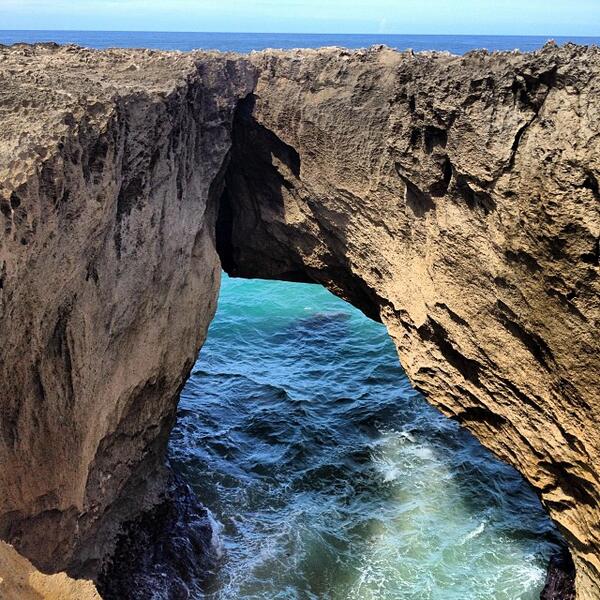
- Cara del Indio – Rock formation recognized as a local icon.
- Jacinto Natural Pool – Another beautiful area for swimming and recreation.
- Saint Antonio of Padua Church – Main city church with historical architecture and cultural relevance.
- Guajataca Plaza – Public space for events and community activities.
- Guajataca Tunnel – Historical construction formerly used as a railway passage.
- Ruins of the San Antonio de la Tuna Chapel – Remains of the first chapel and settlement that gave rise to Isabela.
Beaches
Isabela’s coastline has beaches and recreational areas highly appreciated by tourists and locals:
- Blue Hole Beach ("Playa Shacks" or "Playa Kiquebrado")
- La Poza de las Golondrinas (“La Pocita”)
- Bajura Beach
- Jobos Beach
- El Pastillo Beach
- Montones Beach
- Middles Beach
- Baño La Princesa
- Pozo Teodoro Beach
- Guajataca Beach
- Punta (Posita) Sardinera Beach
Notable People from Isabela
Isabela has been home to personalities who have shaped Puerto Rico’s cultural, political, and artistic history:
- Manuel Corchado y Juarbe – Lawyer, abolitionist, and writer; president of the Liberal Reformist Party and the Puerto Rican Athenaeum. Notable works include the poetry collection Un beso (1881) and the drama El capitán Correa.
- Noel Estrada – Musician and composer, author of the iconic song En mi viejo San Juan.
- Vicente Géigel Polanco – Lawyer, poet, journalist, and essayist; member of the Puerto Rican Athenaeum and the Puerto Rican Academy of History. Served as Attorney General of Puerto Rico and senator at large. Notable works include Canto al amor infinito (1962) and El despertar de un pueblo (1942).
- Esther M. Melón – University professor and writer with multiple literary publications.
- Santiago Polanco Abreu – Raised in Isabela; served as Speaker of the House of Representatives (1963–1964), delegate to the Constituent Assembly (1951), and Resident Commissioner in Washington (1965–1969). He was also a gubernatorial candidate and recognized journalist, essayist, and poet.
Public Schools sorted by educational levels.
Arecibo Region
Isabela District
| Name | Level | Telephone | Address |
| Elementary | |||
| ANTONIO GEIGEL PAREDES | K-6 | (787) 872-1942 | PO Box 545, P.R. 00662-0000 |
| EMILIA CASTILLO | PK-6 | (787) 830-2925 | PO Box 1487, P.R. 00662-0000 |
| EPIFANIO ESTRADA | K-6 | (787) 872-4650 | PO Box 545, P.R. 00662-0000 |
| GLORIA GONZÁLEZ | K-6 | (787) 872-3440 | PO Box 8000, P.R. 00622-0000 |
| JOSÉ JULIÁN ACOSTA | PK-6 | (787) 872-2440 | PO Box 1368, P.R. 00662-0000 |
| JUAN B. HUYKE | K-6 | (787) 872-5520 | PO Box 1368, P.R. 00662-0000 |
| LA PLANTA | K-6 | (787) 872-4096 | PO Box 80000, P.R. 00662-0000 |
| MANTILLA | K-6 | (787) 872-5050 | PO Box 8000, P.R. 00662-0000 |
| MANUEL CORCHADO Y JUARBE | K-6 | (787) 872-2320 | PO Box 855, P.R. 00662-0000 |
| MATEO HERNÁNDEZ | K-6 | (787) 872-5770 | PO Box 545, P.R. 00662-0000 |
| NICANDRO GARCÍA | K-6 | (787) 872-5430 | PO Box 8000, P.R. 00662-0000 |
| NUEVA CEFERINA CORDERO | K-6 | (787) 872-0464 | PO Box 951, P.R. 00662-0000 |
| PARCELAS MORA GUERRERO | PK-6 | (787) 830-5780 | PO Box 2243, P.R. 00662-0000 |
| Intermediate | |||
| IRMA DELIZ DE MUÑOZ | 7-9 | (787) 872-4070 | PO Box 560, P.R. 00662-0000 |
| JOSÉ C. ROSARIO | 7-9 | (787) 830-2025 | PO Box 8000, P.R. 00662-0000 |
| LUIS MUÑOZ RIVERA | 7-9 | (787) 872-2388 | PO Box 2076, P.R. 00662-2076 |
| Secondary | |||
| SU JOSÉ A. VARGAS | K-9 | (787) 872-5650 | PO Box 519, P.R. 00662-0000 |
| High School | |||
| DR. HERIBERTO DOMENECH | 10-12 | (787) 830-2915 | PO Box 540, P.R. 00662-0000 |
| FRANCISCO MENDOZA | 10-12 | (787) 872-2275 | PO Box 1776, P.R. 00662-1776 |
Hymn:
By Adrián Augusto Alfaro (Cholo)
Isabela, permite que me inspire
en tu nombre que incita inspiración
deja que tus bellezas las admire
y le cante con todo el corazón.
Son tus playas hermosas
y tus mares fuente de gran pureza;
cristalinas y adornan tus orillas
las palmeras que abanican
con brisas tus colinas.
En tu historia de Coto y Guajataca
razas dan formación a
tu cultura ejemplificándose
en tu Mabodamaca indio,
firmeza, honor, clase y altura.
Tu Pozo de Jacinto
es leyenda tu nombre
San Antonio de la Tuna
tus gallos, tus quesitos, bellas prendas
Manuel Corchado y Juarbe, su cuna.
Isabela, déjame que me inspire
que me levante al cielo en oración
y que le pida a Dios,
que con bondad te mire
y que siempre te de,
su santa bendición.
Bendita Isabela, mi bello Jardín
mi bella Isabela, de mi corazón.