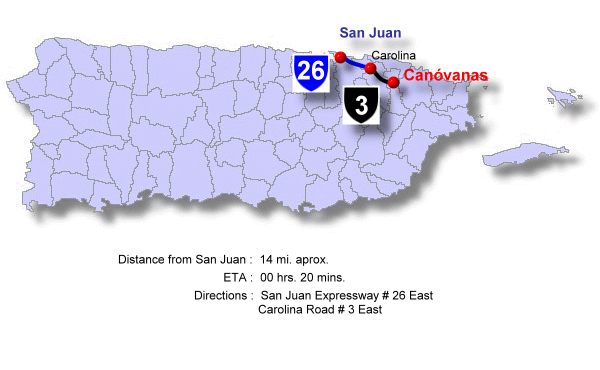
Canóvanas, Puerto Rico
Valiant Town
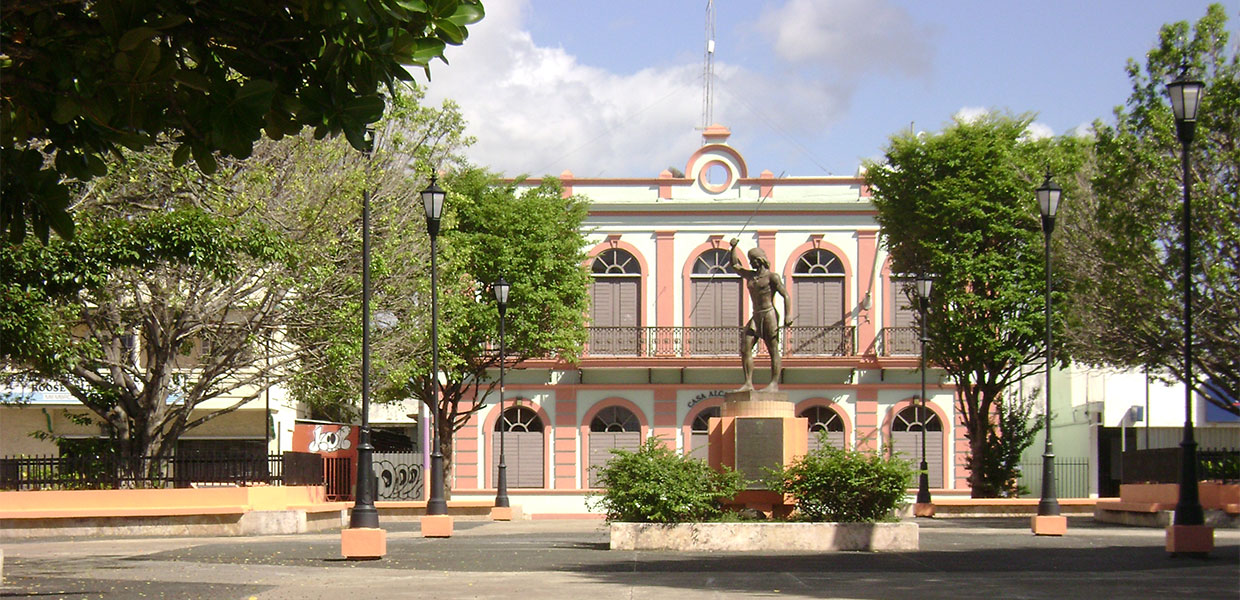
Canóvanas (kah-NO-vah-nahs) is a municipality located in the northeastern region of Puerto Rico, known by multiple nicknames that reflect its history, culture, and contemporary development. It is called the “Valiant Town” due to the feat of Cacica Yuira, who lost her life defending the Spaniards against other Taínos.
It is also known as the “City of Races” for hosting the Camarero Racetrack, the only active racetrack in Puerto Rico, and the “Town of the Chupacabras” because of the famous legend that gained international attention. Its patron saint is Our Lady of the Pillar.
Geographical Borders:
- North: Loíza
- South: Juncos and Las Piedras
- East: Río Grande and Loíza
- West: Carolina and Gurabo
Canóvanas is part of the region known as the Northern Coastal Plains, with the central and northern areas predominantly flat, ideal for urban and agricultural development.
Canóvanas also stands out in sports, especially basketball and volleyball, which is why it is called the “City of the Indians,” in reference to its basketball team. Economically, the municipality hosts several factories (footwear, electrical and electronic equipment, clothing, chemical and food products) and maintains active agriculture (coffee, fruits, vegetables, livestock, and poultry). Its proximity to the San Juan metropolitan area has contributed to sustained population and urban growth.
Foundation and History
The municipality’s name comes from the Taíno cacique Canóbana, whose yucayeke (village) was settled along the banks of the Río Grande de Loíza, then called Cairabón or Cayniabón. Canóbana was entrusted to the colonizer Miguel Díaz and, according to historical records, did not participate in the indigenous uprising of 1511.
The nickname “Valiant Town” comes from the heroic act of Cacica Yuira, who lost her life defending the Spaniards from other Taínos, becoming an emblematic figure of bravery.
Although it is traditionally said that Canóvanas was founded in 1910 by Luis Hernaíz Veronne, it did not become an independent municipality until 1970, after a long administrative process.
From Barrio to Municipality (before 1970)
Until 1969, Canóvanas was a barrio of the Loíza municipality, being the southernmost and farthest from the coast. Its isolation protected it from attacks by rebellious Taínos but also limited its importance until new roads were developed, such as State Road No. 3.
- 1902: Law incorporated Loíza and its barrios into Río Grande; Canóvanas depended on Río Grande.
- 1905: Law repealed; Canóvanas returned to Loíza.
- 1909: First attempt to move the municipal seat to Canóvanas, supported by infrastructure and urban development.
Final Municipalization (1969–1970)
The law of June 30, 1969, recognized Loíza and Canóvanas as distinct population centers, suitable to become independent municipalities. The referendum on August 16, 1970, approved the separation, and on September 14, 1970, Governor Luis A. Ferré officially established Canóvanas as an independent municipality.
Location
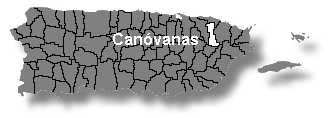 Located in the northeastern part of the island, it is bordered by: Loíza on the north, Juncos and Las Piedras on the south, Carolina and Gurabo on the west, and Río Grande and Loíza on the east.
Area
72.8 km² (28 mi²)
Population
44,120 inhabitants (2020 Census)
Population Density
509.7/km² (1,320/mi²)
Demonym
Canovanenses
Nicknames / Titles
- Valiant Town
- City of the Indians
- City of Races
- Town of the Chupacabras
Barrios of Canóvanas
Canóvanas is composed of six main barrios:
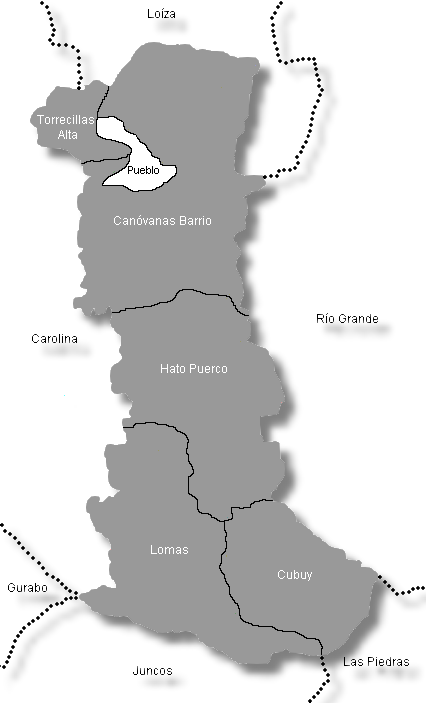
| Census 2020: Population by Barrios - Canóvanas |
Population |
| Canóvanas (barrio) | 22,889 |
| Canóvanas (pueblo) | 3,726 |
| Cubuy | 2,032 |
| Hato Puerco | 5,517 |
| Lomas | 4,971 |
| Torrecillas Alta | 5,985 |
| Total | 44,120 |
Source: U.S. Census Bureau
Patron and Parish
Patron: Our Lady of the Pillar
Parish: Parish of Our Lady of the Pillar
Address: P.O. Box 1612, Canóvanas, P.R. 00729‑1612
Founded: 1903
Topography and Geology
The topography of Canóvanas combines plains, small elevations, and rocky formations, influencing both agriculture and urban development.
- The northern and central regions are mainly flat, ideal for agriculture and settlement.
- Small elevations and limestone mogotes exist in the north and northeast.
- Cerro El Negro, in the Cubuy barrio, reaches significant heights and has archaeological and environmental importance.
- Alluvial soils in the plains favor fruit, vegetable, and coffee cultivation.
Hydrography
The rivers and streams of Canóvanas have shaped both its history and economy, being essential for water supply, agriculture, and local tourism.
- Río Grande de Loíza crosses the northwest corner of the municipality.
- Other important rivers include:
Río Canóvanas, which flows into the Loíza River
Río Cubuy, flowing through the higher areas
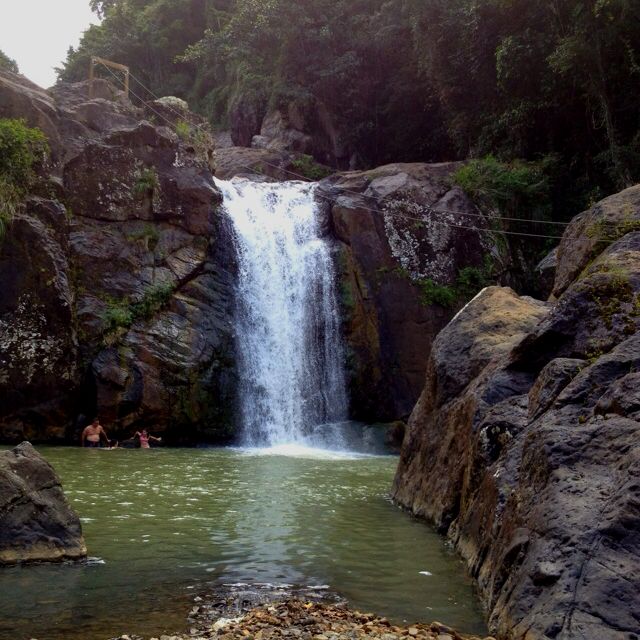
Río Canovanillas, originating in Lomas and emptying into the Loíza River - Recreational areas like Charco Los Pilones are located along these waterways.
Climate
Canóvanas has a typical tropical climate of northeastern Puerto Rico, with warm temperatures and abundant rainfall that support vegetation and agriculture.
- Average maximum temperature: 30–31 ºC (86–88 ºF)
- Average minimum temperature: 20–21 ºC (67–70 ºF) in higher areas
- Average annual rainfall: approximately 1,870 mm (73.6 inches), concentrated in the rainy season
Industry and Economy
Canóvanas has gradually shifted from a traditional agricultural economy to an industrial, commercial, and service-oriented economy, reflecting its proximity to the San Juan metropolitan area.
- Historical agriculture included coffee, sugarcane, fruits, and vegetables.
- Today, manufacturing, pharmaceutical, and electronic equipment industries stand out, along with commerce and services.
- The Camarero Racetrack (Nuevo Comandante) remains an important economic and tourist driver.
- Recent data (DataUSA, 2020):
Median household income: US$27,278
Main employment sectors: retail, healthcare, and administrative services
A significant portion of the population faces economic poverty, reflecting socioeconomic challenges
Archaeology and Heritage
Canóvanas has archaeological and heritage sites revealing pre-Columbian indigenous presence and historical development.
- Cerro El Negro and surrounding areas are of archaeological significance.
- The Jesús T. Piñero House Museum, near the town center, preserves the memory of the first Puerto Rican governor born in the municipality.
- These sites highlight the cultural and heritage richness complementing the municipality’s identity.
Flag
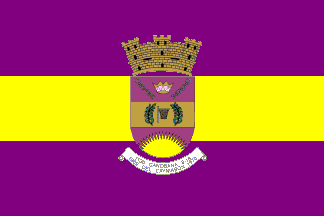 The flag of Canóvanas reflects the municipality’s identity and history through its colors and design.
- Colors: gold and violet, the same as the municipal coat of arms.
- Design: three horizontal stripes:
1. Top stripe: violet
2. Middle stripe: gold with the municipal coat of arms in the center
3. Bottom stripe: violet
The flag symbolizes cultural richness, history, and local pride
Coat Of Arms
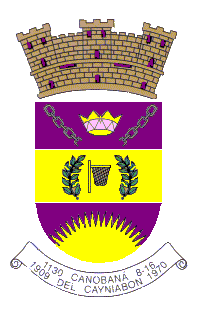 The coat of arms of Canóvanas integrates the municipality’s history, culture, and achievements.
- Gold and violet colors: from the banner of “Sons and Friends of Canóvanas Abroad”
- Mural crown (castle): symbolizes the municipality
- Broken chain: represents Canóvanas’ separation as an independent municipality from Loíza
- Crown in the center of the top stripe: signifies the hierarchy of cacique Canóbana
- Laurel crown with basketball hoop: marks the 23 consecutive wins of the “Loíza Indians” basketball team, with a leaf for each victory
- Rising sun with 16 rays: represents the municipality’s rise and the 16 mayors who served before its independence
- Scroll inscription: commemorates the cacique’s name and key dates: installation of Loíza Municipal Seat in Canóvanas (Nov 30, 1909) and official municipality creation (Aug 15, 1970)
Final design by Néstor Cora Vega (Necove, R.I.P.), author of El Escudo de un Pueblo
Events
- Three Kings Festival – January: Traditional celebration with religious activities, parades, and cultural performances
- Corn Festival – April: Cultural fair honoring agricultural heritage, with music, dance groups, food kiosks, and educational activities
- Traditional Festivals – October: Community activities, crafts, and cultural events preserving traditions
- Christmas in the Countryside – December: Mixes holiday festivities with rural culture, music, crafts, and gastronomy
- Caribbean Derby – December: Major horse racing event at Camarero Racetrack, attracting participants and spectators from across the Caribbean
Points of Interest
Canóvanas combines history, culture, and nature, offering numerous historical and recreational sites:
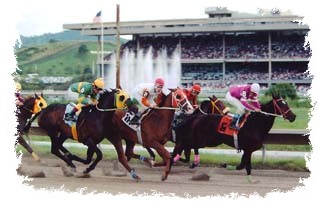
- Camarero Racetrack “El Comandante”: Only racetrack in Puerto Rico, economic and tourist hub
- Ancient Ceiba Tree: Over 300 years old, symbol of longevity and tradition
- Old Dairy: Reflects the town’s livestock and agricultural heritage
- City Hall: Historic administrative and architectural center
- Jesús T. Piñero House Museum: Historical residence of the first Puerto Rican-born governor
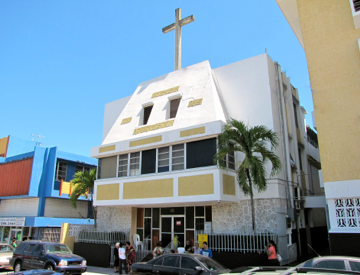
- Our Lady of the Pillar Church: Main parish and center of religious and community life
- Villarán Park: Passive park ideal for recreational and family activities
- Plaza del Canovanense: Town entrance honoring Taíno heritage
- Plaza de Recreo Juan Francisco Arroyo: Public space for cultural and recreational events
- Spanish Bridge: One of Puerto Rico’s oldest bridges, witness to colonial history
- Ruins of the Canóvanas Sugar Mill: Industrial remains reflecting agricultural and sugar industry history
- Palma Sola Viewpoint: Natural lookout with stunning views of the northern plains and surrounding region
Beaches and Nearby Coastal Areas
Although Canóvanas is primarily inland, its proximity to the northeastern coast allows easy access to several nearby beaches in Loíza and Río Grande, popular for recreation and cultural experiences.
Nearby Beaches Include:
- Playa Chatarra (Loíza): Known for family-friendly areas and calm waters.
- Playa Aviones (Loíza): Offers scenic views and local charm.
- Posita de Piñones (Loíza): Shallow waters ideal for families, with Afro-Caribbean cultural experiences nearby.
- Playa Vacía Talega (Loíza): Quiet beach with natural scenery and fewer crowds.
- Luquillo Beach (Río Grande) (Río Grande): Famous for scenic views, food kiosks, and water sports.
- Piñones Beach (Loíza) (Loíza): Combines natural beauty with cultural attractions, such as local food and music.
These beaches make Canóvanas a convenient base for exploring the northeastern coast of Puerto Rico.
Sports
- Basketball: “City of the Indians,” with local records and competitions
- Volleyball: Municipal representative teams
- Horse Racing: Camarero Racetrack, hosting the Caribbean Derby
- Other Sports: Soccer, athletics, recreational leagues
Notable People from Canóvanas
- Rafael José Albandoz – Representative, known for legislative work benefiting Canóvanas
- Juan Calzada González – First lawyer of the municipality
- Milagros Carrillo – Singer and actress, promoter of Puerto Rican culture
- Julio Jiménez – Representative, active in local and national politics
- Benjamín Morales – Dramatic actor, significant contributions to theater
- Francisco F. Mundo – Eminent physician
- Gloria María Pagán – Poet and promoter of Puerto Rican literature
- Rey Francisco Quiñones – Broadcaster and actor
- Enrique Sánchez Cappa – Sports journalist
- Luis Sánchez Cappa – Award-winning journalist
- José L. Vázquez Calzada – Demographer and university professor, former Secretary of Health
Curiosities – The Chupacabras Phenomenon
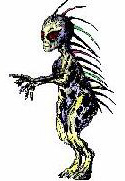
In the 1990s, Canóvanas became the epicenter of “Chupacabras” sightings, attracting international media and curious tourists. Reports of dead animals with strange marks fueled rumors and speculation about this mysterious creature.
Cultural Impact
Beyond reports, the Chupacabras phenomenon became an iconic element of local popular culture. The legend has inspired articles, documentaries, and tourist events, linking Canóvanas uniquely to this paranormal story.
Additional Curiosities
The legend has also inspired local artists, from murals to theater productions and literature, keeping the town’s folklore alive and drawing curiosity from visitors and international media.
The Chupacabras made Canóvanas its home for a time and remains part of the municipality’s cultural identity.
Public Schools sorted by educational levels.
Fajardo Region
Canóvanas District
| Name | Level | Telephone | Address |
| Elementary | |||
| DOMINGO NIEVES ORTIZ (PALMA SOLA) | K-6 | (787) 886-2994 | HC 01 Box 9074, P.R. 00729-0014 |
| DR. PEDRO ALBIZU CAMPOS | K-6 | (787) 876-4610 | PO Box 1636, P.R. 00729-0000 |
| EUGENIO MARIA DE HOSTOS | PK-6 | (787) 876-2415 | PO Box 10000 Suite 265, P.R. 00729-0000 |
| JUANA RODRÍGUEZ MUNDO | K-6 | (787) 876-4828 | PO Box 1636, P.R. 00729-0000 |
| JULIA DE BURGOS | K-6 | (787) 876-3100 | Box 396 Carr. 876 La Central, P.R. 00729-0000 |
| JULIA DE BURGOS ANEXO | K-2 | (787) 876-3100 | Box 396, Carr. 876 La Central, P.R. 00729-0000 |
| LAS PARCELAS CAMPO RICO | K-6 | (787) 886-3441 | PO Box 1636, P.R. 00729-0000 |
| LUIS MUÑOZ MARÍN | K-6 | (787) 876-6120 | PO Box 229, P.R. 00729-0000 |
| MANUEL AGOSTO LEBRÓN | K-6 | (787) 876-6755 | PO Box 35000 Suite 299, P.R. 00729-0014 |
| PEDRO GUTIÉRREZ | K-6 | (787) 876-6740 | PO Box 1464, P.R. 00729-0000 |
| ESTEBAN PABÓN GARCÍA (LAS 400) | K-6 | (787) 876-7280 | PO Box 1794, P.R. 00777-1794 |
| Intermediate | |||
| ANTONIO R BARCELÓ | 7-9 | (787) 876-4055 | PO Box 999, P.R. 00729-0999 |
| JOSÉ SANTOS QUIÑONES | 7-9 | (787) 876-4493 | PO Box 10000 Suite 477, P.R. 00729-0000 |
| Secondary | |||
| GEORGINA BAQUERO | 7-12 | (787) 876-7807 | Box 35000 Suite 20126, P.R. 00729-0014 |
| JOSÉ CALZADA FERRER | K-9 | (787) 876-4359 | PO Box 10000 Suite 272, P.R. 00729-0000 |
| High School | |||
| EDUARDO GARCÍA CARRILLO | 10-12 | (787) 886-2200 | PO Box 1636, P.R. 00729-0000 |
| LUIS HERNAIZ VERONNE | 10-12 | (787) 876-2395 | PO Box 10000 PMB 478, P.R. 00729-0000 |
Hymn:
Canóvanax - By Doris Sandra Estrada Jiménez
Es mi pueblo natal entre los pueblos,
puente fijo en el tiempo mirando al porvenir.
Defendiendo con furia del paso de los siglos,
la simiente del indio que se negó a morir.
Sus hijos son hilera de luceros que adornan
la frente del guerrero que dio vida a su ser:
Hernaíz, Mister Arroyo, los reyes del canasto
y el monstruo de este siglo que nadie pudo ser.
Roca tallada y barro, piel cobriza y areyto
son el alma de un pueblo que defendió su historia.
Los hijos del futuro recordarán al indio
que vivirá por siempre grabado en su memoria.
Contemplo en la ventana del tiempo, los recuerdos
de un poblado de antaño vino en mi corazón
campanas en la plaza, campos verdes y calles
con ritmo de tambores en inmortal canción.
Y al paso de los años es su historia
recuerdo del maíz yuca y bohique.
Hamacas del pasado meciéndose en el tiempo
y un manojo de estrellas coronando un cacique.